
 By Book Club Team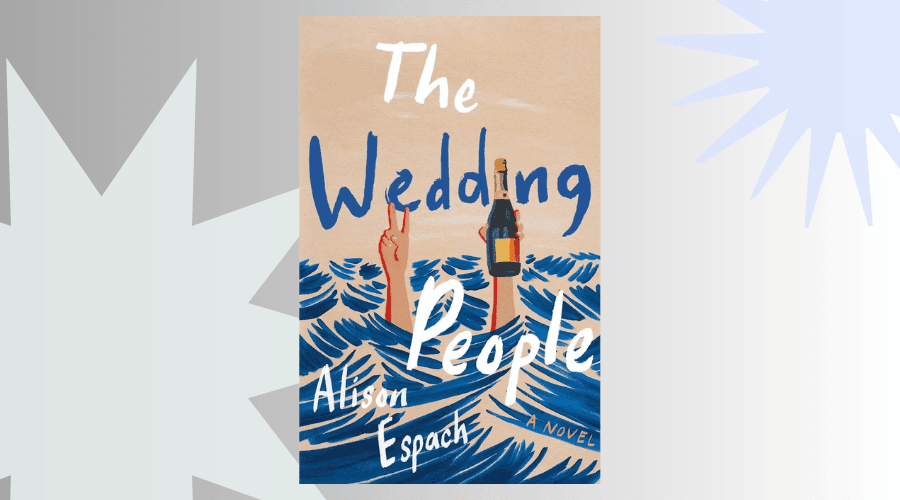
Weddings are supposed to be the cleanest, happiest version of a life—perfect outfits, perfect timelines, perfect love stories. The Wedding People flips that fantasy into something sharper and more honest: what happens when you’re surrounded by celebration while quietly falling apart, and how a single weekend can crack open the life you thought you were living.
This quote collection pulls out the book’s most memorable lines on survival, loneliness, reinvention, and the strange comfort of ritual—plus the darkly funny wedding chaos that keeps everything tense and alive. If you’ve ever felt stuck inside someone else’s “perfect moment,” these quotes hit hard because they name the messy truth underneath it.
Best Quotes from The Wedding People
These quotes are grouped by the book’s core themes, so you can dip into the parts that match what you’re writing about—wedding spectacle and social performance, loneliness inside “successful” relationships, the weird physics of happiness, and the brutal practicality of staying alive when your brain is not on your side. Some lines are funny in a sharp, uncomfortable way; others are quietly devastating.
A quick note: a few quotes touch on suicidal thoughts, because that darkness is part of the novel’s starting point. If you’re reading for comfort, you might want to skip that section. Otherwise, use these as anchors for analysis—each topic shows how the book moves from crisis to connection, and from numbness to a fragile kind of hope.
Quotes on story, meaning, and how we narrate our lives
This theme sits underneath almost everything in The Wedding People: people don’t just experience events—they edit them into a story that helps them survive. The book keeps asking what makes a life “count” when it doesn’t end the way you planned, and it treats meaning as something you make (through interpretation, memory, and language), not something you’re handed.
- “I just mean, a story can be beautiful not because of the way it ends. But because of the way it’s written.”
- “Is that just what life is?”
- “How many times does a person do this over a lifetime?”
- “After the war, after the marriage, after the suicide—what happens next?”
- “Life is unbelievable, she thinks.”
Self-care, responsibility, and survival skills quotes
In the book, survival isn’t presented as inspirational—it’s practical. When Phoebe is at her lowest, the story pivots toward the uncomfortable truth that nobody can do your inner work for you. This topic matters because it’s where the novel shifts from pure crisis into the first real hints of repair: tiny choices, small boundaries, and learning how to take yourself seriously.
- “Nobody can take care of you the way you need to take care of yourself.”
- “It’s your job to take care of yourself like that.”
- “Sometimes doing nothing is the biggest mistake of all.”
- “You’re not crazy, that’s truly all I ask.”
- “In her silence, Phoebe is grateful. She can think again.”
Night, dread, and the rituals that get you through
The “night” in this book is more than a time of day—it’s when the mind gets loudest, when grief and panic and shame stop being distractible. That’s why the book gives weight to rituals: small routines and repeated gestures that keep a person steady when they don’t trust their thoughts. This theme is a quiet backbone of the novel’s emotional realism.
- “It is nice, this ritual.”
- “This recognition that night is something we must prepare for.”
- “Because the night is hard.”
- “Because the night is hard.”
Quotes on wedding spectacle, control, and the “ruined” perfect moment
The wedding isn’t just a setting—it’s a symbol of curated happiness and social performance. It raises the stakes for everything: everyone is trying to control the narrative, preserve beauty, and pretend nothing can go wrong. The book uses “ruin” (a dress, a moment, a plan) to puncture that illusion and show how fragile perfection is—and how aggressively people defend it.
- “But it’s also true that this wedding will never be a waste.”
- “The dress is ruined.”
- “There is no unruining it.”
- “She refuses to explain the wedding people to him.”
- “They are hers, not his.”
Happiness and how it comes (and goes) quotes
Instead of treating happiness as an achievement, the book treats it like weather: real, temporary, unpredictable. This topic matters because it reframes what Phoebe is searching for. The point isn’t to arrive at a permanent “good life”—it’s to notice the moments when life feels livable again, and to accept that fluctuation isn’t failure.
- “I think we talk about happiness all wrong.”
- “For me, it comes and goes.”
- “It shows up and then disappears like a bubble.”
- “When you are happy, everywhere is a happy place; and when you are sad, everywhere is a sad place.”
Loneliness, marriage, and social disconnection quotes
A major tension in the novel is that proximity doesn’t equal intimacy. Weddings are full of people, marriage is supposed to be “together,” and yet loneliness can be most brutal inside those exact structures. This theme gives the book its bite: it exposes how easy it is to be isolated while still looking socially “successful.”
- “You can be married and be very alone,”
- “More alone than you are when you’re… alone.”
- “I know, ever since the pandemic, I’m like… I guess I just have no friends now.”
Quotes on reinvention, identity, and becoming someone new
This is the book’s forward motion: the idea that identity isn’t fixed, and sometimes you only change because you have no other choice. Phoebe’s crisis cracks open the question of who she is outside her old “normal,” and the novel treats reinvention as scary and slow—less makeover, more rebuilding. This theme matters because it’s where the story earns its hope without getting cheesy.
- “Ever since I was a kid, I just knew I wanted to grow up and be normal,”
- “But, if the last few years have taught her anything, it’s that you really can’t ever know who you are going to become.”
- “But, if the last few years have taught her anything, it’s that you really can’t ever know who you are going to become.”
- “It’s time, she knows, to imagine the things she can do.”
- “Becoming who you want to be is just like anything else. It takes practice.”
- “And now they are back, but they are different…”
- “…because nobody comes back from the dead the same.”
- “I am alive,” she says out loud, just to make sure.”
Love, attachment, and memory quotes
Love here isn’t just romance—it’s the invisible pull of shared history, the way memories keep people tethered even when life changes shape. This topic matters because it complicates the book’s “fresh start” energy: you don’t reinvent yourself in a vacuum. The past still tugs, loss still speaks, and connection can be both comforting and destabilizing.
- “Love was an invisible wire, connecting them always.”
- “When they went on those terrible vacations in the Ozarks, they were so happy, they laughed at nearly everything.”
- “She is drawn to the exhaustion of a lived life…”
- “…to the man who has loved deeply and then lost suddenly and carries on.”
Suicidal thoughts and the edge of despair
This is the book’s darkest foundation—the truth that the story begins from a place where living feels unbearable. The novel doesn’t use this theme for shock value; it uses it to show how despair can be blunt, logical-sounding, and isolating, and how tiny interruptions (a conversation, a ritual, a moment of being seen) can start to shift the calculus. It’s the baseline that makes the later flickers of hope feel earned.
- “Because I came here to die. And now look at me.”
- “She doesn’t see the point in staying alive…”
- “…only to do all the same things that made her want to die.”
- “She doesn’t see the point in staying alive only to do all the same things that made her want to die.”
- “She always had the feeling that it was very, very dangerous to live even one day,”
- “How easy it is to be dead. How lucky to be alive, even for just one day.”
In the end, The Wedding People is less about the wedding itself and more about what a wedding exposes: the pressure to look happy, the loneliness that can exist inside “normal,” and the way grief makes even beautiful places feel unreal. These quotes show how the novel balances sharp humor with emotional honesty—letting the chaos stay funny while never pretending the pain is small.
Taken together, the lines trace a quiet arc: from survival as a minute-by-minute task, to the first flickers of connection, to the possibility of becoming someone new without erasing what happened. The book doesn’t promise a perfect ending. It suggests something more believable—that life can still be worth living, not because it turns out neatly, but because the story keeps getting written.