
 By Book Club Team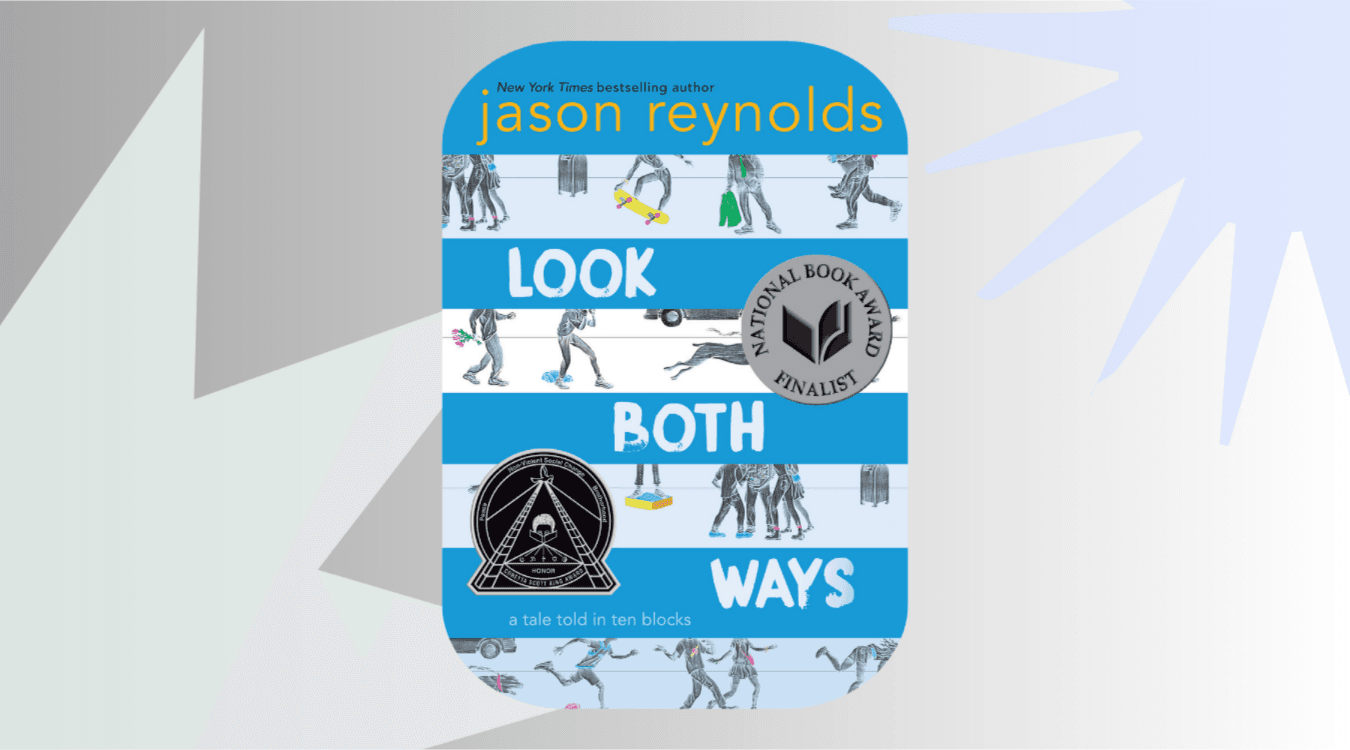
Look Both Ways by Jason Reynolds is the kind of book that looks simple at first and then quietly sneaks up on you. It follows a group of kids as they leave school and head home, but that ordinary setup turns into something much richer: a funny, tender, uneasy, and very human portrait of what young people carry with them once the school day ends.
If you are looking for a clear summary, the short version is this: the book is told through ten connected stories, each taking place over a few blocks after school. Different students take center stage in each section, and their walks home reveal fears, friendships, family pressures, loneliness, imagination, and resilience. There is no single dramatic plot twist. Instead, the power of the book comes from how Jason Reynolds shows that an ordinary afternoon can contain whole emotional worlds.
Look Both Ways Summary: The Short Answer
Look Both Ways is a linked-story novel about middle school students walking home from school in the same neighborhood. Over ten blocks, Reynolds shifts from one set of kids to another, showing how each child experiences the same city differently. Some stories are comic and energetic, while others are sadder or more tense, but together they create a larger picture of community, vulnerability, and growing up.
The book is not a traditional novel with one hero and one central conflict. It is more like a mosaic. Each story stands on its own, but the characters, streets, and moods connect, so by the end, readers understand that all these children are living side by side, each with private worries and hopes that are not always visible from the outside.
Full Summary of Look Both Ways
The book begins with a very ordinary event: school has ended, and kids are making their way home. From there, Reynolds builds ten separate but connected episodes. Each one focuses on a different child or group of children, and each walk home becomes a window into something bigger than the trip itself.
Some kids use jokes, games, or wild conversations to distract themselves from fear. Others are dealing with friendship problems, embarrassment, grief, family tension, or the strange feeling of being old enough to move through the world on their own but still young enough to feel unsteady in it. On the surface, the children are just crossing streets, talking, bickering, or passing time. Underneath, they are managing emotions that feel much larger than the few blocks in front of them.
That is one of the book’s smartest moves. Reynolds treats the walk home as a border space between childhood and independence, between public life and private life, and between what kids say out loud and what they keep to themselves. By the time the final story ends, the neighborhood feels less like a setting and more like a living network of overlapping lives.
Because the book is built from linked stories, the reading experience is cumulative. One section may seem playful, another awkward, another painful, and another unexpectedly hopeful. Together, they create a fuller emotional map of the neighborhood. Readers are meant to notice not just what happens in each story, but how these stories echo each other.
How the Book Is Structured
The most important thing to understand about Look Both Ways is that it does not follow a single plot line from start to finish. Instead, Jason Reynolds uses a novel-in-stories structure. Each chapter works almost like a short story, but all of them belong to the same world and the same stretch of time.
That structure matters because it mirrors the book’s larger idea: every person walking down the street has a story you probably do not know. Two children may leave the same school at the same time and live only a few blocks apart, yet the emotional reality of their afternoons can be completely different.
This is why the book can hold so many tones at once. One story may be hilarious and driven by quick dialogue. The next may be quieter or sadder. Rather than feeling scattered, that range makes the book feel honest. Childhood is not one emotional note, and Reynolds never pretends it is.
What Happens in the Book, Really?
If you are expecting a neat beginning, middle, and end with one central problem to solve, Look Both Ways may feel unusual. The real “plot” is the accumulation of small but meaningful moments. Children joke to cover anxiety. Friends test each other’s loyalty. Siblings and classmates carry around worries that adults may not fully see. Ordinary sidewalks turn into places where confidence, fear, anger, imagination, and longing all show themselves.
In that sense, the book is about movement, but not just physical movement. The characters are also moving emotionally. They are figuring out who they are when adults are not right beside them. They are learning how to read danger, how to protect themselves, how to stay loyal to friends, and how to survive the parts of growing up that feel lonely or unfair.
So while there is no single giant event that defines the novel, there is still momentum. The book keeps widening. Each new story adds texture, and by the end, readers understand the neighborhood in a much deeper way than they did at the beginning.
Main Ideas and Themes in Look Both Ways
1. Ordinary life is never really ordinary
One of Reynolds’s biggest strengths is showing that a short walk home can contain as much emotional drama as a much larger event. A conversation on a sidewalk can reveal fear. A joke can hide pain. A routine route can become charged with memory, tension, or possibility.
This makes the book feel deeply observant. It insists that children’s inner lives are complex, even when adults overlook them.
2. Humor and fear often live side by side
Many parts of the book are funny. The dialogue is lively, weird, and sharp in a way that feels true to how kids actually talk. But the humor is not there just to entertain. Often, it works as cover. The jokes, stories, and games are ways for the characters to manage uncertainty, awkwardness, or fear.
That emotional layering is part of what makes the book memorable. Reynolds understands that kids are often funniest when they are also trying not to be scared.
3. Growing up means becoming visible to danger
The book captures a very specific stage of childhood: old enough to travel through the neighborhood with some independence, but not old enough to feel fully safe or in control. The children in Look Both Ways are constantly reading the world around them. They notice people, sounds, tensions, and risks.
The title itself points to this. “Look both ways” is practical advice for crossing the street, but it also becomes a larger idea about awareness. These kids have to pay attention. Safety is not just a rule. It is a way of moving through the world.
4. Community is real, but so is isolation
Even though the characters share streets and routines, many of them feel alone in their own worries. That contrast gives the book much of its emotional bite. A neighborhood can be crowded and still lonely. People can walk side by side and remain partly unknown to each other.
At the same time, the linked structure suggests that lives overlap more than people realize. The children are part of something larger, even when they feel separate.
5. Childhood is serious, even when adults dismiss it
Another important theme is that children’s experiences should not be treated as small just because the characters are young. The feelings in this book are not miniature versions of “real” emotions. They are real emotions. Reynolds writes with the assumption that embarrassment, fear, grief, and hope matter fully in the lives of children.
Why the Title Look Both Ways Matters
The title works on more than one level. Literally, it refers to crossing streets safely during the walk home. That alone fits the setting. But the phrase also becomes a metaphor for paying attention to the world from multiple angles.
To “look both ways” in this book means noticing what is happening around you and recognizing that every person you pass may be carrying something invisible. It also suggests caution, maturity, and the complicated awareness that comes with growing up. These children are learning that getting home is not only about distance. It is also about judgment, emotional survival, and reading the world correctly.
Ending Explained
The ending of Look Both Ways is not built around a final twist or a single dramatic reveal. Instead, the ending works by deepening the book’s central idea: every child has a story, and those stories matter even when they seem brief from the outside.
By the final pages, Reynolds has shown readers a whole neighborhood in fragments. The effect is powerful because the book does not force everything into one tidy conclusion. Life on these blocks continues. The children keep growing, worrying, joking, and making their way home. That open-endedness feels intentional. It reflects the truth that most important emotional experiences do not end neatly just because a book chapter does.
So if you are wondering, “What is the point of the ending?” the answer is that the ending completes the pattern rather than solving one big mystery. It leaves readers with a stronger awareness of connection, vulnerability, and the unseen depth of ordinary lives.
What Makes Jason Reynolds’s Approach Effective
Reynolds is especially good at capturing voice. Even in summary form, that is worth mentioning, because the book’s impact depends a lot on how these kids sound and think. The language feels energetic and alive, and that keeps the book from turning into a heavy message novel. It has serious themes, but it never feels like a lecture.
He also trusts readers. Rather than overexplaining every emotion, he lets small scenes carry meaning. That gives the stories room to breathe and invites readers to do some interpretive work of their own. For a book about children moving through a neighborhood, it is impressively layered.
Is Look Both Ways More About Plot or Character?
It is much more about character and atmosphere than about a fast-moving plot. That is not a weakness. It is the entire design of the book. Reynolds wants readers to pay attention to personality, emotional texture, and the hidden significance of everyday experiences.
If a reader goes in expecting a traditional adventure or one major conflict, the book may feel episodic. But if the reader meets it on its own terms, the structure becomes one of its best features. The point is not what huge event happens. The point is how much life can happen in a short stretch of time.
Who This Book Will Appeal To
Look Both Ways works especially well for readers who like character-driven stories, interconnected narratives, and books that balance humor with emotional depth. It is also a strong choice for classrooms or book groups because each story gives readers something slightly different to respond to.
Some readers will connect most with the comedy. Others will respond to the loneliness, the social tension, or the feeling of watching children learn how complicated the world can be. Because the book is made of multiple perspectives, it gives many kinds of readers an entry point.
Final Thoughts on Look Both Ways
The best way to describe Look Both Ways is probably this: it turns a walk home into a whole emotional universe. Jason Reynolds takes an everyday routine and reveals how much is hiding inside it. The result is a book that feels light on its feet but heavy with meaning.
If you need a simple summary, the book follows a group of students on their walks home from school through ten connected stories. If you want the deeper version, it is about attention, vulnerability, neighborhood life, and the private worlds children carry with them. That is what makes it linger after the last page. It reminds readers that there is no such thing as “just” walking home.