
 By Chloe Heuston
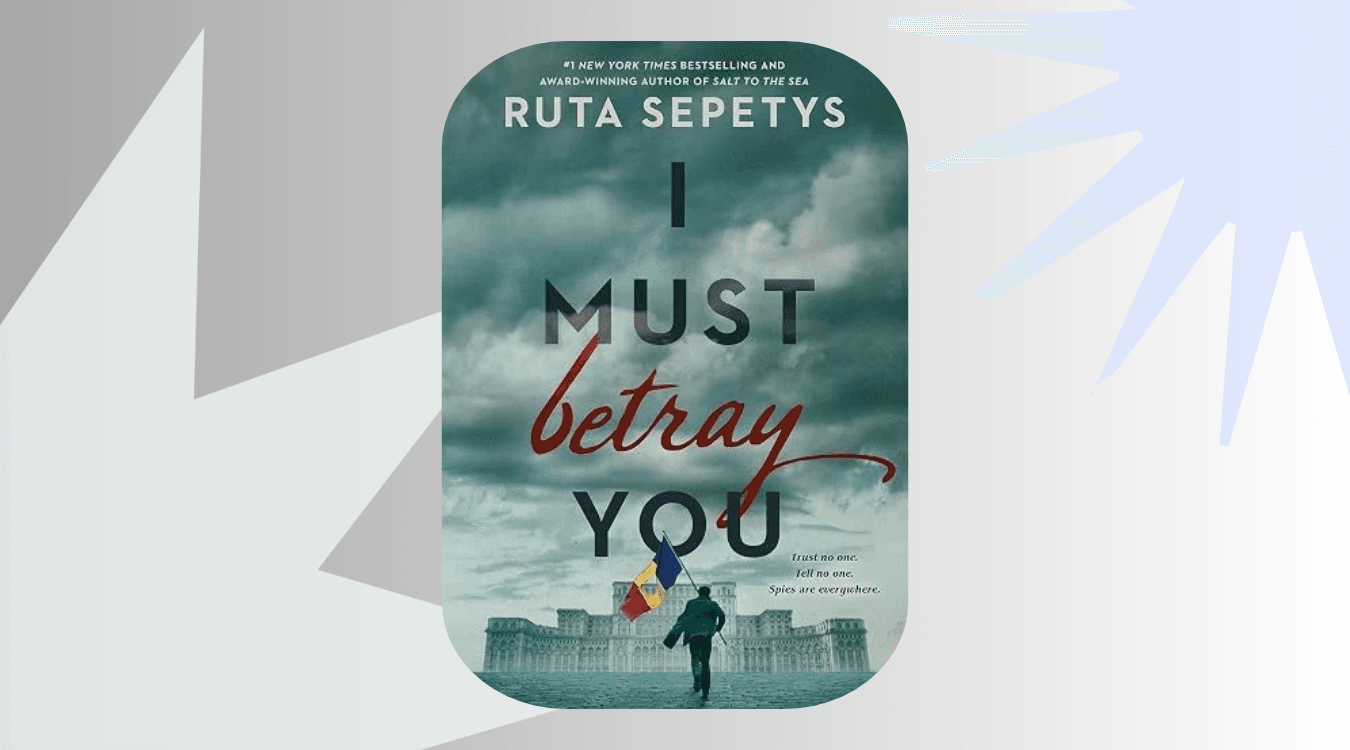
I Must Betray You by Ruta Sepetys is the kind of historical novel that feels intensely personal and politically terrifying at the same time. It tells the story of one teenage boy trying to survive life under a dictatorship, while also asking a bigger question: what happens to trust, family, and identity when a government turns ordinary people into informants?
If you are looking for a clear I Must Betray You summary, this guide covers the plot, main ideas, characters, and the meaning of the ending without getting lost in unnecessary detours.
I Must Betray You summary at a glance
I Must Betray You follows seventeen-year-old Cristian Florescu, who lives in Romania in 1989 during Nicolae Ceaușescu’s brutal communist regime. Cristian dreams of becoming a writer, but he lives in a world ruled by fear, shortages, surveillance, and propaganda. When the secret police, known as the Securitate, blackmail him into becoming an informer, he is forced into an impossible position. As he struggles with guilt, fear, and the need to protect his family, Cristian begins to understand how dictatorship poisons every relationship. By the end of the novel, the Romanian Revolution brings the regime crashing down, but not before Cristian has been changed by the cost of living in a system built on betrayal.
Quick overview of the book
| Title | I Must Betray You |
| Author | Ruta Sepetys |
| Genre | Young adult historical fiction |
| Setting | Romania, 1989 |
| Main character | Cristian Florescu |
| Main conflict | Cristian is forced to inform for the secret police while trying to hold on to his conscience |
| Major themes | Betrayal, truth, freedom, fear, resistance, survival |
Full plot summary of I Must Betray You
Life under Ceaușescu’s Romania
The novel opens in Romania near the end of 1989, where daily life is shaped by state control. Food is rationed. Electricity and heat are unreliable. People stand in long lines for basic necessities and never know when shelves will be empty. Citizens are expected to praise the government in public, even when they are suffering in private. Children grow up learning that the wrong word, spoken to the wrong person, can have serious consequences.
Cristian Florescu is seventeen and observant, thoughtful, and quietly ambitious. He wants to write, which already makes him dangerous in a society where truth is tightly controlled. He notices everything: the lies in official speeches, the fear in people’s faces, the humiliation of having to pretend that life is better than it is. Sepetys makes it clear very early that Cristian is not simply living in a harsh political system. He is living inside a machine designed to crush honesty.
Cristian is blackmailed into becoming an informer
The central turning point comes when Cristian is cornered by the Securitate, Romania’s secret police. They exploit his vulnerability and force him to become an informer. He does not step into this role because he believes in the regime. He is pushed into it by fear and pressure, which is exactly the point. The novel is interested in how authoritarian governments create betrayal not just through cruelty, but through coercion.
Once Cristian is trapped, he has to live a double life. Outwardly, he must appear obedient. Inwardly, he is disgusted by what is happening and terrified of what he might be forced to do. He knows that any information he gives could endanger classmates, neighbors, teachers, or even people in his own family. That knowledge becomes one of the heaviest burdens in the book.
The emotional cost of surveillance
Much of the novel’s tension comes from the fact that Cristian can never fully relax. He is not just afraid of the state in some distant, abstract way. He is afraid in kitchens, classrooms, hallways, and city streets. The regime reaches into every part of life.
As Cristian continues navigating this impossible situation, he becomes even more aware of how surveillance destroys trust. Friends censor themselves. Families keep secrets even from one another. People become careful with jokes, opinions, and even facial expressions. A careless moment can be dangerous. A casual conversation can turn into evidence. Under that kind of pressure, betrayal stops being exceptional and starts feeling ordinary.
This is one of the novel’s sharpest insights: dictatorship does not only punish dissent. It reshapes human relationships until suspicion feels normal.
Cristian begins to resist in quiet ways
Even while trapped, Cristian does not completely surrender himself. He begins to look for ways to hold on to truth, memory, and moral agency. His instincts as a writer matter here. He pays attention, records what he sees, and tries to understand the larger system around him. In a place built on lies, observation becomes its own form of resistance.
He also starts to recognize that he is not alone. Other people are frightened, but they are not all broken. Beneath the surface of obedience, there are cracks in the regime. There are whispers, small acts of rebellion, hidden anger, and moments of solidarity. That does not make the danger disappear, but it changes Cristian’s sense of isolation. He begins to see that fear is widespread, yet so is the desire for freedom.
Romania moves toward revolution
As the story moves forward, the political atmosphere starts to shift. Rumors spread. News from elsewhere in Eastern Europe suggests that communist regimes are not invincible. In Romania, however, the state tries to suppress information and maintain control through intimidation and violence.
When protests begin and unrest grows, Cristian finds himself living through history rather than merely reading signs of it. The tension of the novel intensifies because readers know that the regime is unstable, but the characters do not know when change will come or how deadly it will be. For them, revolution is not a clean historical event. It is confusion, danger, hope, misinformation, and sudden courage.
The fall of the regime
The climax of the novel arrives with the Romanian Revolution. Public fear begins to crack, and the government’s power no longer looks absolute. Cristian witnesses the frightening, chaotic collapse of a system that once seemed untouchable. The same state that demanded loyalty now appears desperate and brittle.
This ending matters because it does not suggest that freedom arrives like a magic trick. The regime falls, but the emotional damage remains. Cristian has seen what fear can do to people. He has learned how easily the state can invade private life. He has also learned that truth matters precisely because lies can become a governing force.
By the end of the novel, there is hope, but it is hard-won hope. The book refuses to pretend that survival under terror leaves people unchanged.
Main characters in I Must Betray You
Cristian Florescu
Cristian is the emotional center of the novel. He is intelligent, sensitive, and morally aware, which makes his situation even more painful. He does not want power. He wants honesty, creativity, and a future. What makes him compelling is that he is not a fearless action hero. He is a teenager trying to survive impossible pressure without losing himself.
Cristian’s family
His family represents both love and vulnerability. They are part of what gives Cristian strength, but they are also part of what makes him easy to manipulate. The regime knows that family loyalty can be weaponized. Cristian’s fear is never only about what will happen to him. It is also about what could happen to the people he loves.
The Securitate
The secret police function as more than a group of individual antagonists. They represent a system built on intimidation, files, secrets, and control. In many ways, they are the novel’s true villain: a machinery of fear that teaches people to betray one another and then calls that loyalty.
Major themes in I Must Betray You
1. Betrayal as a system, not just an action
The title is the book’s central idea. Cristian does not simply choose betrayal in a normal moral sense. He is trapped inside a political order that makes betrayal feel compulsory. The word “must” is doing a lot of work here. Sepetys shows that authoritarian systems force impossible decisions on ordinary people and then leave them carrying the shame.
2. Truth as resistance
Cristian’s desire to write is not a random character detail. It connects directly to the novel’s belief that truth has power. In a dictatorship, facts are dangerous. Memory is dangerous. Honest language is dangerous. The book suggests that recording reality, naming injustice, and refusing propaganda are forms of resistance, even before open revolt begins.
3. Fear and silence
One of the most unsettling parts of the novel is how thoroughly fear organizes daily life. People stay silent not because they have nothing to say, but because speaking has consequences. That silence protects them in the short term, yet it also helps the regime survive. The novel asks readers to consider how fear can become social, inherited, and normalized.
4. Hope under oppression
Despite its harsh subject matter, the novel is not hopeless. It shows that even under severe repression, people continue to imagine freedom. Sometimes that hope appears in private conversations, sometimes in memory, and sometimes in collective action. The point is not that hope makes oppression easy. It is that hope keeps people human inside conditions designed to dehumanize them.
I Must Betray You ending explained
The ending of I Must Betray You works on both a historical and emotional level. Historically, it leads into the collapse of Ceaușescu’s regime during the Romanian Revolution. Emotionally, it shows that Cristian’s real struggle has been about whether he can live inside a system of betrayal without becoming defined by it.
That is why the ending feels powerful rather than neat. The dictatorship falls, but there is no suggestion that trauma vanishes overnight. Cristian has seen what fear does to a country. He understands that people have betrayed one another, but he also understands why. The novel asks readers to hold both truths at once: individuals are responsible for their choices, and oppressive systems deliberately warp those choices.
A useful way to read the ending is this: the regime loses political power, but Cristian wins something more personal. He reaches a clearer sense of moral truth. He sees that survival matters, but so does refusing to let lies have the final word.
Why this book hits so hard
What makes I Must Betray You especially memorable is that it does not treat history like a set of distant facts. It brings dictatorship down to the level of the refrigerator, the classroom, the family table, and the private thought you are afraid to say aloud. The novel makes political oppression feel intimate, which is exactly why it is so effective.
It also avoids a simplistic good-versus-evil framework. There are clearly cruel forces in the story, but many of the most painful moments come from moral gray areas: people staying quiet, people protecting loved ones, people compromising a little at a time. That complexity makes the book useful for discussion because readers may disagree about what counts as courage, forgiveness, or survival.
Book club and discussion angles
- What does the title really mean? Is the novel saying Cristian is guilty, or is it arguing that the regime itself creates betrayal?
- How does fear change morality? Would readers judge characters differently if they were living under the same pressure?
- Why is writing so important in the novel? What does truth-telling accomplish when open resistance seems impossible?
- Does the ending feel hopeful? Or does it mainly show how long the damage of dictatorship lasts?
- How personal should we read political history? Does the novel work best as a coming-of-age story, a historical warning, or both?
Final thoughts
If you want the simplest possible I Must Betray You summary, it is this: the novel tells the story of a Romanian teenager forced to inform for a brutal dictatorship, and of how he struggles to keep his conscience alive as his country moves toward revolution.
But that short version misses what makes the book linger. This is not just a story about one betrayal. It is a story about a system that teaches betrayal as a survival skill, and about the stubborn human need to tell the truth anyway. That tension is what gives the novel its force, and it is why the book remains such a strong choice for readers who want historical fiction with real moral weight.