
 By Book Club Team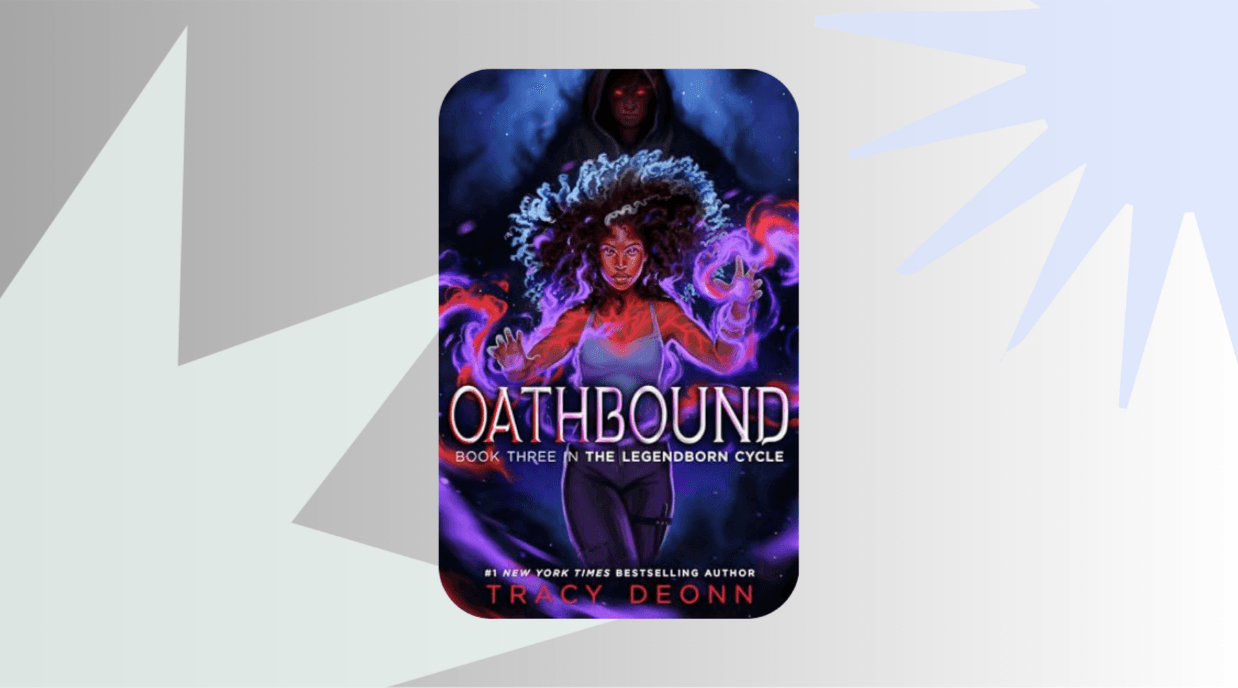
TL;DR — Oathbound Review & Summary
- Oathbound has a strong Goodreads average (~4.24/5), with the majority of readers giving it 4–5 stars, showing broad approval despite some division.
- Readers praise its deep world-building, emotional intensity, and thematic ambition, especially around power, trauma, and institutional corruption.
- Character arcs and multiple POVs are a highlight for many, adding depth beyond Bree’s perspective.
- The book is often described as darker and heavier than earlier installments, which some readers love and others find challenging.
- Common criticism focuses on uneven pacing and a “middle-book” or setup feel, with less narrative closure than expected.
- Reactions to character decisions—particularly Bree’s isolation and shifting relationships—are polarizing.
Oathbound Reviews and Ratings
Reader reactions to Oathbound reflect both enthusiasm and critique, and that mix shows up clearly in its ratings: on Goodreads the book holds an average of around 4.24 out of 5 stars across tens of thousands of ratings, with roughly 44 % 5-star and 37 % 4-star ratings, while smaller portions give it 3 stars or lower. Goodreads Many reviewers appreciate Deonn’s ambitious world-building, emotional depth, and thematic complexity, praising the expanded mythology and character exploration. At the same time, some readers point to uneven pacing and a “middle-book” feel as reasons for lower scores, reflecting the divide between those who loved the direction of the story and those who found it slower or less satisfying than its predecessors. Overall, the ratings show Oathbound as broadly well-liked but not as uniformly celebrated as earlier entries — a divisive yet conversation-worthy installment in The Legendborn Cycle.
Positive Highlights
1. Deep world-building and emotional complexity
Many reviewers praise Deonn’s expansion of the series’ mythology and emotional breadth, noting that the story tackles grief, trauma, identity, and power structures in ways that feel layered and resonant. The Nerd Daily
2. Character development and multiple POVs
Several readers appreciated the use of multiple perspectives, which helps deepen character arcs and broaden the world beyond just Bree’s experience.
3. Romance and relationships
The emotional tension, especially between Bree and her companions, was seen as a strong point, adding stakes and nuance to the fantasy plot. GoodeyReads
4. Representation and thematic relevance
Reviewers frequently applaud the series for center-stage Black characters and meaningful engagement with systemic injustice, giving YA fantasy a voice that speaks to contemporary issues.
Mixed or Critical Feedback
1. Pacing and structure complaints
A common critique is that Oathbound feels unevenly paced — slow in parts, especially early on, and longer than some readers expected, with some scenes seen as dragging or overly sprawling.
2. “Bridge” or middle-book feel
Some readers describe it as feeling like a setup book rather than a fully satisfying stand-alone arc, setting up future events more than delivering resolution. Goodreads
3. Characterization disputes
Not all readers agreed on how characters behaved — some felt Bree regressed or lacked agency at times, and that certain relationships (including Selwyn’s role) were unsatisfying or underdeveloped.
4. Plot and thematic criticisms
A few reviewers pointed to elements they found confusing, contrived, or thinly justified, including how memory loss and power dynamics are handled, questioning narrative choices or emotional beats. The Lesser Joke
Overall Impression
Most readers regard Oathbound as ambitious and rich, with strong emotional impact and meaningful representation, but also as a book that divides fans — some seeing it as a powerful, essential installment, others feeling it’s overly long or too much of a “middle book” on the way to later sequels.
Oathbound Summary (Spoilers)
After the events of Bloodmarked, Bree Matthews is in exile by choice. She has severed her ancestral connection to Rootcraft, walked away from the Legendborn Order, and distanced herself from everyone she loves — including Selwyn and Nick — believing that her presence only puts them in danger. Desperate to survive without being hunted or controlled, Bree enters into a binding pact with the Shadow King.
The bargain gives Bree access to immense power and protection, but at a steep cost: she becomes oathbound to the Shadow King, tying her fate to his survival and his long-term goals. While he presents himself as a necessary ally against the Order’s corruption, it becomes increasingly clear that he is manipulating Bree’s fear, trauma, and need for autonomy. Bree gains control over new shadow-based abilities, but each use pulls her further away from the person she used to be.
Back within the Legendborn Order, chaos erupts. Selwyn Kane has disappeared after defying the Round Table, and his absence destabilizes the Kingsmage lineage. Nick Davis is imprisoned by the Merlins, who fear his growing power and his refusal to follow Order protocol. Nick invokes ancient Arthurian laws to protect himself, forcing the Order into political paralysis and exposing how deeply broken its power structures truly are.
As the story unfolds through multiple perspectives, the Order’s moral decay becomes undeniable. Powerful Merlins are kidnapped or murdered, secrets about the founding of the Order come to light, and it is revealed that many of its traditions were built on exploitation — particularly of marginalized magic users whose power was harvested and erased from history.
Bree eventually learns that her mother’s death and her own magical inheritance were never isolated events. The Shadow King has been orchestrating events for generations, positioning Bree as a pivotal figure who can either dismantle the Order or remake it under new rule. Though Bree resists becoming a weapon, she realizes that by binding herself to him, she has already stepped onto a path that may cost her her freedom entirely.
The climax forces Bree to confront Selwyn and Nick again, but she is no longer the same person they remember. Her power has grown darker, her boundaries harder, and her trust fractured. Rather than returning to the Order or submitting to the Shadow King’s full control, Bree makes a radical choice: she claims ownership of her oath, redefining it on her own terms and rejecting the idea that power must come from domination — whether institutional or monstrous.
The book ends with the world on the brink of open magical war. The Legendborn Order is exposed and divided, the Shadow King’s influence is expanding, and Bree stands between them — no longer a pawn, but not yet fully free. Her relationships remain unresolved, her future uncertain, and the cost of her choices still unfolding, setting the stage for a far darker and more explosive continuation of the series.
Is Oathbound the Part of the Series?
he Oathbound arc is the darkest and most transformative phase of The Legendborn Cycle, marking a shift from discovery and rebellion into consequence and reckoning. In this part of the series, Bree Matthews no longer seeks acceptance from the Legendborn Order or safety within inherited systems of power; instead, she chooses autonomy at any cost. The arc reframes heroism not as loyalty to tradition, but as the courage to redefine oaths, break cycles, and claim identity on one’s own terms.
The Legendborn Cycle includes:
- Legendborn — Bree Matthews uncovers a secret society descended from King Arthur’s knights while investigating her mother’s death, discovering that her own ancestral magic is deeply entwined with the Order’s power.
- Bloodmarked — As Bree’s abilities grow, the Legendborn Order reveals its willingness to control and sacrifice her, exposing deep corruption within its ranks and forcing Bree to choose between belonging and freedom.
- Oathbound — Oathbound is the third installment in The Legendborn Cycle, and the series is still ongoing. Tracy Deonn has been clear (both in interviews and in how Oathbound ends) that Bree’s story isn’t finished yet. The book deliberately sets up unresolved conflicts — political, magical, and emotional — that are meant to carry into at least one more sequel.
So think of Oathbound less as an ending and more as a turning point: it closes the “initiation into the Order” phase of the story and opens a much larger, darker arc about power, autonomy, and what comes after rejecting broken systems.