
 By Chloe Heuston
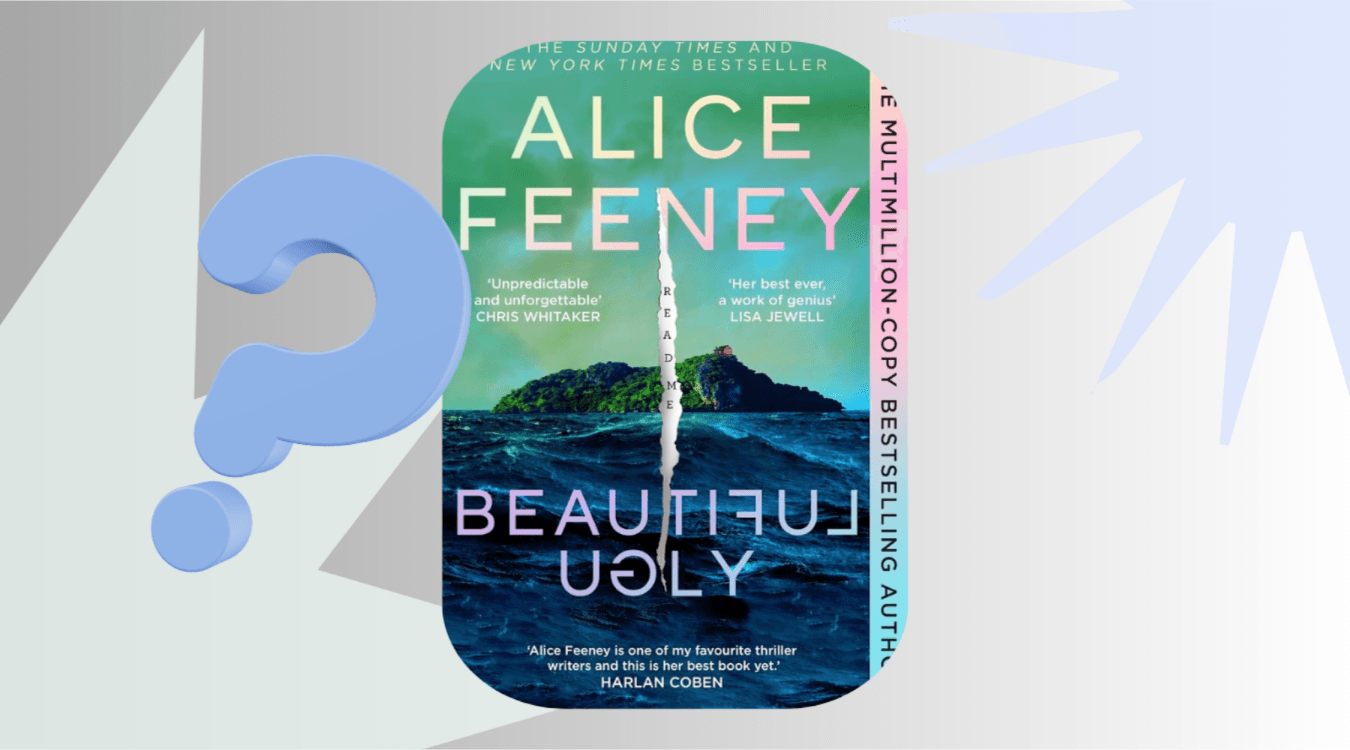
If your book club picked Beautiful Ugly, you are not going to run out of things to debate. Alice Feeney built this novel to provoke side-eyes, theories, and at least one passionate speech about whether the ending is brilliant, frustrating, or somehow both. This guide gives you a mix of spoiler-free and spoiler-heavy discussion questions so your group can talk about the book’s twists without getting stuck in plot recap.
Beautiful Ugly is a 2025 psychological thriller by Alice Feeney. It follows novelist Grady Green after his wife, Abby, disappears; a year later, he retreats to a tiny Scottish island and sees a woman who looks exactly like her. Publisher copy frames the novel as a story about marriage and revenge, while reviews highlight its dual perspectives, shifting timeline, and deliberately unstable sense of truth.
Spoiler note: Questions 1 through 12 are spoiler-light and work well before everyone has finished the novel. Questions 13 through 20 are best saved for the second half of your meeting, once everybody is caught up.
Quick overview of Beautiful Ugly
| Detail | Quick answer |
|---|---|
| Author | Alice Feeney. |
| Genre | Psychological thriller with domestic-thriller elements. |
| U.S. publication date | January 14, 2025. |
| Core setup | Grady Green’s wife vanishes after a phone call, and a year later he goes to a remote Scottish island where he thinks he sees her again. |
| Best discussion topics | Marriage, grief, unreliable narration, atmosphere, revenge, and whether the ending works. |
Spoiler-free Beautiful Ugly book club questions
- How does the opening disappearance shape your expectations for the rest of the novel? Abby’s vanishing act happens quickly, but the emotional fallout hangs over everything that follows. Talk about whether the book hooked you through mystery, dread, sympathy, or simple curiosity.
- What was your first impression of Grady? Did he strike you as sympathetic, frustrating, self-absorbed, genuinely shattered, or some messy combination of all four? A good thriller often depends on how long a reader is willing to stay inside a difficult mind.
- What role does the Scottish island setting play in the story? Grady goes there to recover and write, but the place quickly feels uncanny rather than healing. Did the island read to you as gothic, claustrophobic, dreamlike, or even darkly funny?
- Which unsettling detail got under your skin the most? Reviews point to the island’s odd rules, limited businesses, and even the absence of birds. Which specific touch made the setting feel wrong to you?
- Did the book feel more like a missing-person mystery or a marriage thriller? The plot starts with Abby’s disappearance, but the emotional center keeps circling back to what kind of marriage Grady and Abby actually had. Which side of the novel felt stronger in your reading?
- How does Feeney use grief in the novel? Grady’s whole identity seems warped by not knowing whether Abby is dead or alive. Did his grief feel sincere, performative, manipulative, or impossible to separate from the mystery itself?
- What did you make of Kitty? She is not just Grady’s agent; she is also Abby’s godmother, which gives her a very unusual place in the story. Did you trust her, and did that trust change as you read?
- Did the dual perspectives work for you? The novel moves between Grady’s point of view and Abby’s, while also shifting in time. Did that deepen the suspense, or did it make you hold the story at arm’s length?
- How important is the title? Beautiful Ugly signals contradiction before the plot even starts. Kirkus notes that the chapter headings echo that same oxymoronic pattern, so which opposites felt most important by the middle of the book: love and harm, truth and performance, beauty and decay?
- Which side characters felt most memorable, and why? Did they seem like fully realized people, pressure points in the mystery, or part of the novel’s larger sense that Grady is never standing on stable ground?
- Did the twists feel earned as you were reading? Some readers love a thriller that keeps moving the goalposts; others start to resist when the ground won’t stay still for long. Where did your group land?
- What kept you reading most: plot, voice, atmosphere, or suspicion? This question is especially good for a mixed group, because people who disagree about the ending often agree on what the book does well moment to moment.
Spoiler discussion questions for after everyone finishes
- At what point did you stop trusting Grady? Both professional reviews and reader guides flag that unreliable narration is central to how the novel works. When did your confidence in his version of events begin to crack?
- How do Abby’s chapters change the moral balance of the story? Once you know more, do those sections feel like correction, counterargument, misdirection, or all three at once? What does the novel gain by refusing to let one voice fully own the truth?
- Do you read the ending as justice, revenge, survival, or something even murkier? Since the book openly frames itself around marriage and revenge, this is one of the richest arguments a club can have. Your answer probably depends on how morally flexible you are willing to be by the final pages.
- Which clue felt most obvious in hindsight? Was there a moment, image, relationship, or odd detail that suddenly clicked into place after the reveal? Good thrillers often make readers feel either brilliantly observant or hilariously fooled.
- How convincing was the island community as part of the novel’s design? Did the island feel like a believable social world, a heightened gothic stage, or a kind of moral theater where secrets could finally be forced into the open?
- What does the novel suggest about how easily intimacy can hide the truth? The story keeps asking whether really knowing a spouse is possible at all. By the end, did you think the book was cynical about marriage, or just skeptical about the stories people tell inside one?
- Did the ending satisfy you emotionally, even if it stretched plausibility? This is often where book clubs split. Some readers want airtight logic; others care more about whether the ending feels emotionally or thematically right.
- If you could change one thing about the final act, what would it be? Would you adjust the pacing, clarify a twist, sharpen a motivation, or leave even more unresolved? This is a great final question because it lets people say what they really wanted from the book.
Themes worth bringing into your discussion
1. Marriage as performance
The publisher’s own framing of the novel as a story about marriage and revenge is a clue that the real mystery is not just where Abby went, but what the marriage actually was. For book clubs, that opens a bigger question: how much of any relationship is truth, and how much is role-playing?
2. Grief, guilt, and self-narration
Grady presents himself through loss. Because Abby is missing rather than confirmed dead, he lives in a state of suspended meaning, and that limbo shapes how he tells his story. Your group can talk about whether grief makes him more trustworthy, less trustworthy, or simply harder to read clearly.
3. Setting as a pressure cooker
The remote island is not just scenic background. Reviews emphasize that the place is strange from the beginning, with social rules and eerie details that turn setting into a mechanism of suspense. That makes the novel especially good for discussing how thrillers use location to destabilize readers before the bigger reveals arrive.
4. Contradiction everywhere
The title is an oxymoron, and Kirkus notes that the chapter headings continue that pattern. A smart book club conversation can follow those contradictions outward: love and cruelty, beauty and rot, truth and fiction, safety and trap. The novel is practically asking readers to decide which opposing ideas can coexist.
A simple way to run your Beautiful Ugly discussion
- Start broad: Ask everyone for a one-sentence reaction such as “atmospheric but bonkers” or “twisty and clever.” It gets the room talking fast.
- Move to trust: Ask when each person first began doubting Grady. This usually reveals very different reading styles.
- End with a vote: Have the group choose one label for the ending: satisfying, maddening, tragic, darkly funny, or all of the above.
Final thoughts
The best Beautiful Ugly book club questions are the ones that pull your group away from simple plot mechanics and toward interpretation. Yes, this is a twisty thriller. But it is also a novel about stories people tell inside marriages, the seduction of self-pity, and the uneasy line between revenge and resolution. If your club loves a book that can inspire both admiration and argument, this one should keep the conversation going long after the snacks are gone.