
 By Book Club Team
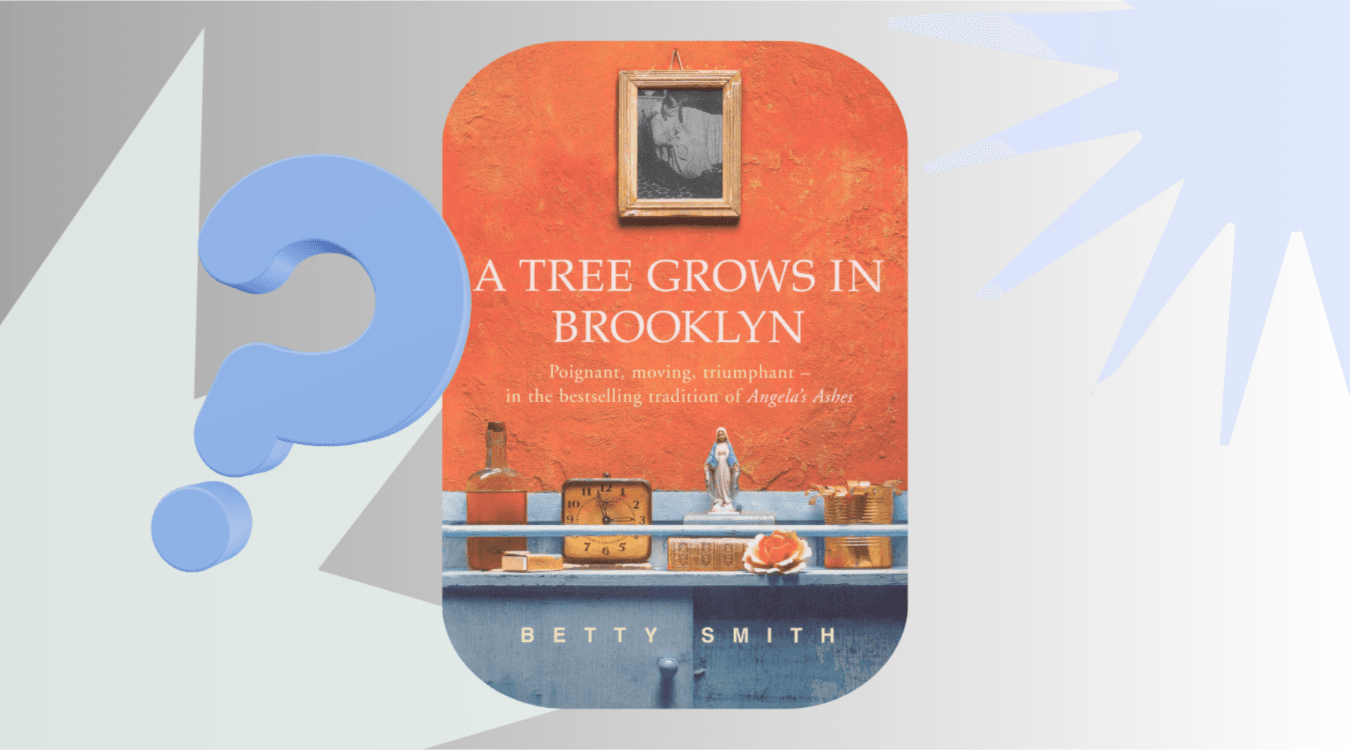
Betty Smith’s A Tree Grows in Brooklyn gives book clubs a lot to work with: family loyalty, poverty, education, class, longing, embarrassment, love, and the strange ways hope survives even when money does not. It is the kind of novel people remember emotionally first and intellectually second, which makes it especially good for discussion.
If you are looking for A Tree Grows in Brooklyn book club questions, the best conversations usually focus on Francie’s point of view, the tension between Johnny and Katie as parents, and the novel’s mix of realism and tenderness. Below, you will find discussion questions that move beyond simple plot recall and into interpretation, disagreement, and character analysis.
Quick overview for your book club
- Author: Betty Smith
- Genre: coming-of-age, historical fiction, literary fiction
- Best discussion topics: family, class, education, resilience, gender, hope, and the meaning of the tree
- Spoiler note: These questions work best if everyone has finished the novel.
Short summary of A Tree Grows in Brooklyn
The novel follows Francie Nolan as she grows up in a poor family in Brooklyn. She is observant, ambitious, sensitive, and often torn between what she has and what she wants. Her father, Johnny, is affectionate and charismatic but unreliable; her mother, Katie, is practical, disciplined, and emotionally tougher. Between neighborhood life, school, family hardship, and Francie’s private inner world, the book becomes a powerful story about how identity forms under pressure.
What makes the novel linger is that it refuses to simplify its characters. Love and disappointment live in the same house. Pride and shame often show up in the same scene. Even the book’s hope is not soft or easy. It has to fight for space.
A Tree Grows in Brooklyn book club questions
- What makes Francie such a compelling central character?
Francie is intelligent, watchful, and often more emotionally aware than the adults around her. Talk about whether her appeal comes from her innocence, her ambition, her loneliness, or her ability to notice beauty in places that are not especially beautiful. Your group might also discuss whether she feels like a child throughout the novel or whether she often seems older than her years.
- How does the novel portray poverty without reducing its characters to poverty alone?
This is one of the book’s great strengths. Money shapes nearly every choice the Nolans make, but the novel never suggests that hardship is the only thing that defines them. Discuss how Smith shows appetite, taste, ritual, pride, and imagination alongside material deprivation. In other words, why does the family feel fully alive rather than simply tragic?
- Which parent has the greater influence on Francie: Johnny or Katie?
Johnny gives Francie affection, attention, and romance in the broadest sense of the word. Katie gives her structure, survival skills, and an understanding of reality. A good discussion here is not just about who is the “better” parent, but about what each one gives Francie that the other cannot. Which inheritance matters more in the long run?
- How should readers judge Johnny Nolan?
Johnny is one of the most debated characters in the novel because he is deeply lovable and deeply frustrating. Some readers see him as a tragic figure whose warmth cannot overcome his weakness. Others see him as too destructive to excuse, no matter how charming he is. Where did your sympathy land, and did it change as the novel went on?
- Is Katie Nolan emotionally hard, or simply realistic?
Katie can seem severe, especially beside Johnny’s softness and sentiment. But the novel also makes clear that practicality is one reason the family survives at all. Discuss whether Katie’s toughness is a limitation, a form of love, or both. Did your opinion of her deepen as you saw more of what she carries?
- Why is education so important in the novel?
For Francie, education is not just about school achievement. It represents mobility, dignity, self-definition, and a way to imagine a larger life. Talk about whether the book presents education as liberation, escape, discipline, or all three. Does learning make Francie more connected to her world, or more restless within it?
- What does the tree symbolize?
The tree is the novel’s clearest symbol, but it still allows for multiple readings. It can represent resilience, stubborn life, adaptation, hope, or the ability to grow in unpromising conditions. Your group might discuss whether the symbol is mainly about Francie, about the whole neighborhood, or about the immigrant and working-class experience more broadly.
- How does the book handle the tension between realism and sentiment?
The novel is often tender, but it is not naive. It allows beauty and heartbreak to occupy the same page. Discuss whether the emotional tone ever feels too nostalgic or whether the sentiment is earned because it is balanced by harsh detail. This question often leads to a larger conversation about why the book feels moving rather than manipulative.
- What role do books, stories, and imagination play in Francie’s life?
Reading gives Francie pleasure, refuge, and a language for thinking beyond her immediate circumstances. But imagination is not only escape; it also becomes a way of interpreting pain and preserving dignity. Talk about whether books protect Francie from reality or prepare her to face it more fully.
- How does the neighborhood function almost like a character?
Brooklyn in this novel is not just a backdrop. It shapes manners, expectations, opportunities, and even emotional habits. Discuss how the setting influences what the characters believe is possible. Does the neighborhood feel nurturing, limiting, harsh, communal, or some complicated mix of all of those?
- How does the novel portray class and respectability?
One of the most interesting threads in the book is the difference between being poor and being seen as poor. The characters care deeply about appearances, pride, and what other people think. Talk about how respectability operates in the novel. Who is most concerned with it, and what does that reveal about shame, ambition, and social survival?
- What does the novel suggest about gender roles and female independence?
Francie grows up watching different models of womanhood: disciplined, practical, romantic, unconventional, maternal, and self-protective. Discuss what she seems to learn from the women around her. Does the book suggest that women have to become hard to survive, or does it leave room for several kinds of strength?
- How important is Aunt Sissy to the emotional life of the novel?
Aunt Sissy brings warmth, humor, and a looser moral energy into the story. She also complicates ideas about what makes someone respectable, maternal, or wise. Talk about whether Sissy serves mainly as comic relief, as emotional support, or as an alternative model of adulthood that the novel quietly values more than it first appears to.
- Where do you see the strongest examples of pride in the novel?
Pride in A Tree Grows in Brooklyn is rarely simple. It can protect characters from humiliation, but it can also keep them from asking for help or speaking honestly. Consider which moments of pride felt admirable and which felt costly. How does pride shape the Nolan family’s relationships with each other and with the world outside the home?
- What does the novel say about survival and compromise?
Very few characters in this book get to live by pure principle. Survival often requires calculation, silence, emotional restraint, or uncomfortable trade-offs. Discuss which compromises the novel treats as necessary and which it treats as tragic. Does the book admire survival no matter the method, or does it still make moral distinctions?
- Do you think Francie sees her family clearly, or does she romanticize them?
Francie is perceptive, but she is also emotionally invested, especially when it comes to Johnny. Talk about whether her love sometimes softens the truth. Then ask the reverse question too: are there moments when her intelligence makes her harsh or prematurely adult in the way she judges the people around her?
- How does the novel complicate the idea of the American Dream?
The book believes in striving, but it does not pretend striving happens on equal terms. Hard work matters, but so do luck, gender, class, family structure, and social perception. Discuss whether the novel ultimately endorses the American Dream, questions it, or reshapes it into something quieter and more personal than success in the usual sense.
- What scenes or relationships best show love without sentimentality?
One reason this novel works so well for book clubs is that its love is rarely tidy. Care often appears through labor, routine, sacrifice, or restraint rather than speeches. Talk about which relationships felt most emotionally true to you. Was the deepest love in the book the most visible, or the least?
- How should your group interpret the ending?
The ending invites readers to think about change, continuity, and what growing up really costs. Discuss whether you found the ending hopeful, bittersweet, liberating, or emotionally divided. Does the novel end with escape, maturation, acceptance, or some blend of the three?
- Why do you think A Tree Grows in Brooklyn still resonates with readers?
Plenty of books deal with hardship, but not all of them stay so alive in readers’ minds. Talk about what gives this novel its staying power. Is it Francie’s voice, the family dynamics, the class detail, the emotional honesty, or the fact that it understands how embarrassing and beautiful ordinary life can be at the same time?
Extra discussion prompts if your group gets quiet
- Which character did you feel most protective of, and why?
- Which character would be easiest to misjudge on a first reading?
- What does “success” look like in this novel?
- Which matters more in the book: love, discipline, or opportunity?
- If you could hear one side character’s full story, whose would you choose?
Themes worth keeping in mind during discussion
Resilience without romanticizing struggle
The novel respects endurance, but it does not turn poverty into a charming life lesson. That balance is part of what makes the book feel honest. Your discussion may become richer if you keep asking not just who survives, but what survival asks from them.
Family as both refuge and burden
The Nolans love one another, but love does not erase damage. The book is particularly sharp about the way families can nourish identity while also limiting it. That tension is where many of the best book club conversations begin.
Education, taste, and the hunger for more
Francie’s ambition is not only economic. She wants language, beauty, privacy, dignity, and self-possession. The novel understands that wanting “more” is not always greed; sometimes it is a form of self-respect.
Final thoughts
The best A Tree Grows in Brooklyn book club questions are the ones that let your group sit with contradiction. Johnny can be both adored and condemned. Katie can be both loving and severe. Francie can be both clear-eyed and romantic. Even the tree itself means more than one thing.
That is why this novel lasts. It does not offer a neat moral. It offers a life, and lives are gloriously inconvenient to summarize. For a book club, that is excellent news.