
 By Book Club Team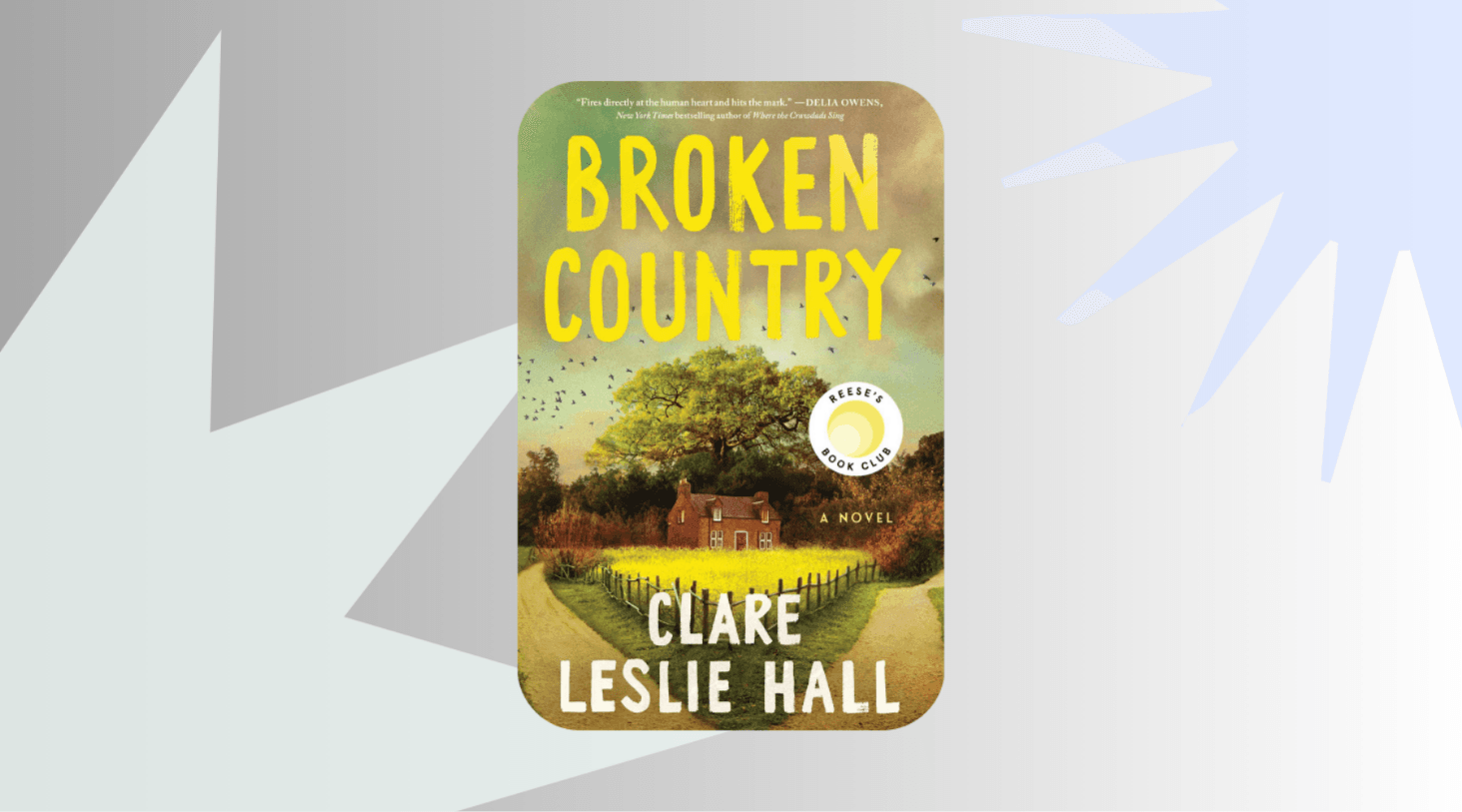
Broken Country is a novel that resists easy answers. Quiet, emotionally restrained, and deeply reflective, it explores the long shadow of first love, the weight of unchosen lives, and the subtle forces—class, place, memory—that shape human decisions. Rather than offering dramatic resolution, the novel invites readers into moral ambiguity, emotional silence, and the uncomfortable space between desire and responsibility.
Because of this complexity, Broken Country rewards slow reading and serious conversation. The questions below are designed for book clubs, literature classes, and close-reading groups that want to move beyond surface-level reactions. They focus on narrative structure, ethical tension, romantic idealism, and the psychology of longing—encouraging readers to examine not only the characters’ choices, but their own assumptions about love, fulfillment, and sacrifice.
Whether you approach the novel as a love story, a social critique, or a meditation on memory and regret, these questions aim to open a richer, more challenging discussion—one that reflects the novel’s refusal to simplify the emotional lives it portrays.
Interpretive Lenses
- Feminist lens: emotional labor, sacrifice, gendered expectations
- Class-based lens: social inheritance and constrained desire
- Existential lens: freedom, responsibility, and unchosen lives
- Psychological lens: memory, attachment, and emotional repression
Book Club Questions
Narrative & Structure
- How does the novel’s handling of time (memory, return, reflection) shape our moral judgment of the characters? Would we judge Beth differently if the story were strictly chronological?
- What does the novel gain by being restrained and quiet rather than dramatic? Is emotional understatement a strength or a limitation here?
- To what extent is this novel about events, and to what extent is it about interior life? Where does its real “action” occur?
Love, Choice & Moral Ambiguity
- Is Beth’s enduring attachment to her first love an act of emotional honesty or emotional stagnation? Can both be true at once?
- Does the novel suggest that some loves are more “true” than others, or does it reject that hierarchy altogether?
- Is choosing stability over passion portrayed as wisdom, fear, or tragedy? What evidence in the text supports your reading?
Agency & Responsibility
- How much agency does Beth truly have? Where are her choices constrained by class, place, gender expectations, or emotional history?
- At what moments does Beth actively choose her life—and at what moments does life seem to happen to her?
- Does the novel hold its characters morally accountable, or does it ask the reader to suspend judgment?
Class, Place & Social Order
- How does class operate in the novel without being overtly discussed? What is implied rather than stated?
- In what ways does the countryside function as a character rather than a backdrop?
- Is the rural setting portrayed as nurturing, confining, or both? How does this duality mirror Beth’s inner life?
Grief, Loss & Silence
- How does the novel portray grief as something lived alongside daily life rather than as a single defining event?
- What role does silence—what is not said—play in the emotional architecture of the novel?
- Are the characters harmed more by what happens to them, or by what they never articulate?
Identity & Selfhood
- Who is Beth when she is alone, and who is she in relation to others? Are these selves reconcilable?
- Does the novel suggest that identity is something we build—or something that forms around us despite our efforts?
- What parts of Beth’s identity feel chosen, and which feel inherited or imposed?
Reader Response & Interpretation
- What emotional response does the novel seem to invite from the reader: empathy, discomfort, recognition, resignation?
- Is this a hopeful novel, a tragic one, or a realistic one—and what criteria are you using to decide?
- Does the ending offer resolution, acceptance, or merely continuation? How should we interpret its emotional final note?
Big Picture Questions
- What does Broken Country ultimately suggest about the cost of staying versus the cost of leaving?
- Is the novel arguing that some lives are inevitably “broken,” or that brokenness is simply part of being human?
- If this novel were teaching a single philosophical lesson, what would it be—and does the text support that reading, or resist it?
Romantic Idealism: Critique and Participation
- How does the novel expose the damage caused by romantic idealism while still relying on its emotional power to move the reader?
- Does the narrative invite us to mourn a love that may never have been viable in reality?
If so, is this mourning itself a form of romantic idealism the novel cannot escape? - To what extent is the “ideal” love in the novel a product of memory rather than lived experience?
How does nostalgia function as a romanticizing force? - Is the first love portrayed as inherently meaningful, or meaningful because it remains incomplete?
Would its power survive fulfillment?
Narrative Ethics & Reader Complicity
- How does the novel make the reader complicit in romantic idealism by aligning us emotionally with Beth’s longing?
Are we encouraged to want what the novel intellectually questions? - Is the emotional beauty of longing presented as justification enough for its costs?
Or does the novel quietly insist that beauty is not the same as moral legitimacy? - Does the novel critique romantic idealism more through consequence than through argument?
What is the ethical weight of showing harm without overt condemnation?
Desire, Fantasy & the Self
- Is Beth in love with a person, or with a version of herself that existed only in relation to that person?
How does romantic idealism become a way of preserving identity? - Can romantic idealism function as a form of self-protection rather than self-deception?
Does the novel allow longing to be a survival strategy? - What does the novel suggest about desire that is never acted upon?
Is it purer—or more dangerous—than desire fulfilled?
Realism vs. Romance
- How does the novel balance social realism (class, obligation, consequence) against romantic fantasy?
Which ultimately governs the characters’ lives? - Is the novel arguing that romantic idealism is incompatible with adult life—or simply incompatible with certain social structures?
- Does the countryside setting intensify romantic idealism by aestheticizing emotional stasis?
Would the same story function differently in an urban environment?
Structural & Philosophical Stretch
- If romantic idealism depends on imagined alternatives, how does the novel use counterfactual thinking (“what might have been”) as a narrative engine?
- Does the novel ultimately affirm that unchosen lives carry as much emotional truth as chosen ones?
What does that imply about the ethics of longing? - Can we read the novel as resisting closure because romantic idealism itself resists resolution?
Is the lack of “neat ending” a thematic necessity rather than a stylistic choice?
Key Themes
Love & Romantic Idealism
At the heart of Broken Country is a sustained interrogation of romantic idealism, particularly the cultural belief that first love carries a unique, enduring truth. The novel questions whether this belief reflects emotional authenticity or whether it is sustained precisely because the relationship remains unfinished. By denying the reader a fully realized romantic reunion, the text exposes how longing thrives on absence, imagination, and projection.
Importantly, the novel both critiques and participates in romantic idealism. While it demonstrates the emotional damage caused by unresolved attachment, it also renders that attachment with lyric tenderness, inviting reader sympathy. In doing so, the novel refuses a moral binary: romantic idealism is neither fully endorsed nor dismissed, but presented as a powerful emotional structure that shapes identity long after practical choices have been made.
Time, Memory & Regret
Time in Broken Country is not linear or stable; it is filtered through memory, which operates emotionally rather than factually. The past is not recalled as it was, but as it is felt in the present. Memories shift in tone and meaning, shaped by regret, longing, and the desire to reimagine lost possibilities.
The novel suggests that regret does not arise solely from mistaken choices, but from the human tendency to mythologize unchosen lives. The past becomes a site of emotional editing, where certain moments are magnified and others erased. As a result, time in the novel functions less as chronology and more as psychological terrain—one that characters revisit repeatedly, unable to resolve it into certainty or closure.
Class & Social Boundaries
Class in Broken Country operates quietly but decisively, shaping the limits of possibility without explicit confrontation. Social boundaries are rarely named outright, yet they determine which relationships are encouraged, which futures appear viable, and which desires must remain unspoken. The novel illustrates how class functions not only as an economic structure, but as an emotional regulator—teaching characters what they are allowed to want.
Rather than dramatizing class conflict, the novel reveals its power through internalized restraint. Characters police their own desires, anticipating social judgment before it occurs. This subtlety underscores how deeply class expectations infiltrate personal identity, shaping choices long before they are consciously articulated.
Place & Belonging
The rural setting of Broken Country is more than a backdrop; it is an active force in the novel’s emotional logic. The countryside represents continuity, inheritance, and tradition, offering both comfort and confinement. Its rhythms encourage stability and repetition, discouraging rupture or reinvention.
This setting mirrors Beth’s internal state. Just as the land resists sudden change, so too does Beth’s emotional life remain rooted in patterns established long ago. The novel suggests that belonging to a place can offer meaning and identity, while simultaneously limiting transformation. Place, therefore, becomes a metaphor for the tension between rootedness and freedom—a tension the novel never fully resolves.
Duty vs. Desire
Perhaps the novel’s most persistent conflict lies between duty and desire, yet Broken Country refuses to frame this opposition as a clear moral dilemma with a correct answer. Duty offers structure, loyalty, and social legitimacy; desire offers emotional truth, intensity, and self-recognition. Crucially, the novel demonstrates that both paths involve loss.
By resisting resolution, the text challenges the assumption that authenticity requires transgression, or that responsibility necessitates emotional sacrifice. Instead, it presents adult life as a series of imperfect negotiations, where choosing one form of fulfillment inevitably forecloses another. The novel’s power lies in its refusal to privilege desire over duty, or vice versa, insisting instead on the emotional cost embedded in all meaningful choices.
Taken together, these themes position Broken Country as a novel less concerned with what characters do than with what they must learn to live with. It is a study of emotional residue—of love that persists without resolution, of memory that reshapes the past, and of lives formed as much by restraint as by action.