
 By Book Club Team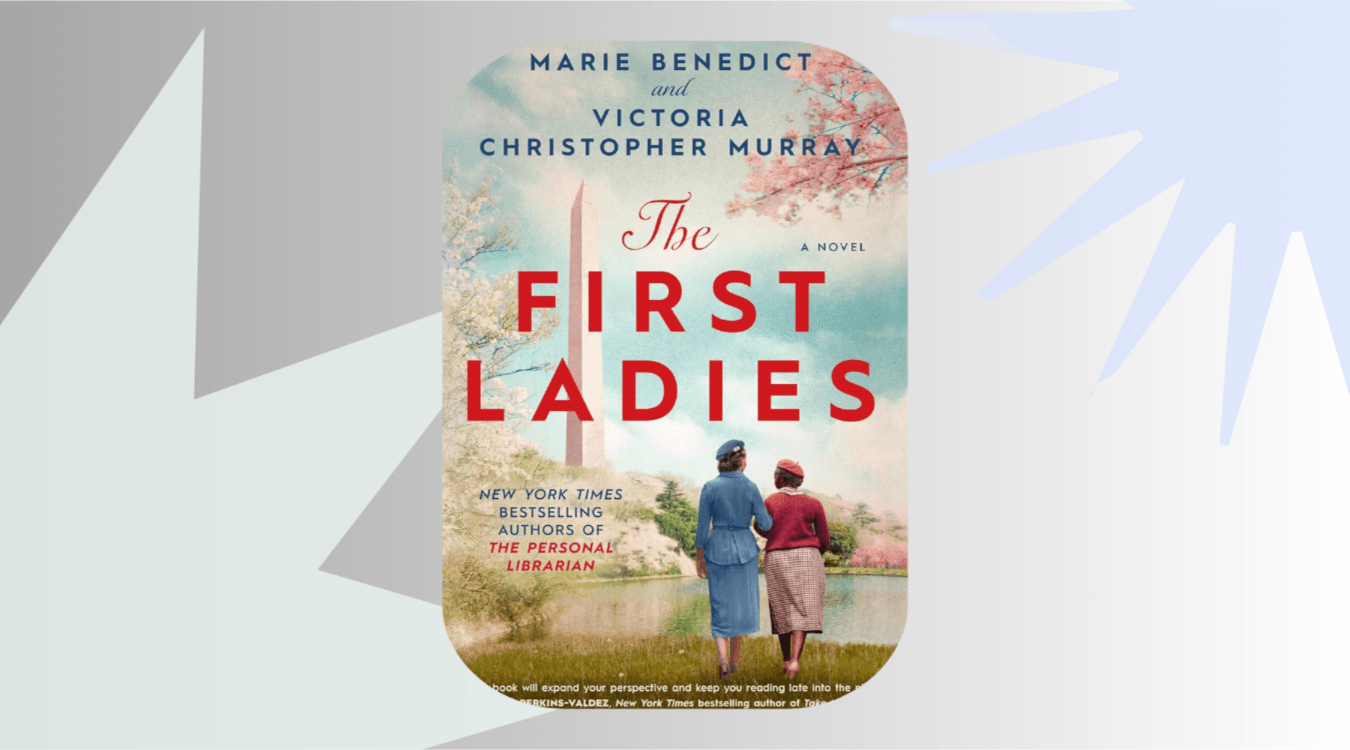
If you’re looking for a quick The First Ladies summary, here’s the short version: this historical novel by Marie Benedict and Victoria Christopher Murray follows the friendship and political partnership between Eleanor Roosevelt and Mary McLeod Bethune. More than a White House story, it is a book about how two women from radically different backgrounds use education, influence, and persistence to challenge racism and push for change.
Published by Berkley on June 27, 2023, The First Ladies is rooted in real history, but it tells that history through a novel’s emotional lens. The authors center not only Eleanor Roosevelt, who is already familiar to many readers, but also Mary McLeod Bethune, the educator and civil rights leader whose work helped shape national politics in ways that are still easy to underestimate.
The First Ladies at a glance
- Authors: Marie Benedict and Victoria Christopher Murray.
- Genre: Historical fiction.
- First publication date: June 27, 2023.
- Main historical figures: Eleanor Roosevelt and Mary McLeod Bethune.
- Big idea: Friendship can be private comfort, public strategy, and political force all at once.
The First Ladies summary
The novel begins with the first meeting between Mary McLeod Bethune and Eleanor Roosevelt at a women’s club luncheon in the late 1920s. Right away, the book makes race and social hierarchy impossible to ignore. Mary enters the room as a respected public figure, but she is still treated as an outsider because she is a Black woman. Eleanor, meanwhile, is positioned close to power but is still figuring out what kind of public woman she wants to be. Their first encounter sets the tone for the whole novel: this is a story about who gets welcomed into rooms, who gets watched, and who decides to change the rules.
Mary is already formidable when the story opens. In real life, she founded the Daytona Normal and Industrial Institute for Girls in 1904, and that school later became Bethune-Cookman College. She also became a major national advocate for Black education, women’s advancement, and civil rights. The novel uses that stature well. Mary is not written as someone waiting to be “discovered” by Eleanor; she is already accomplished, strategic, and used to resistance.
Eleanor’s arc works differently. The book presents her as a woman with status, access, and intelligence, but also with personal hurt and political constraints. Historically, she went on to transform the role of first lady, holding her own press conferences, traveling widely, and building a public voice that extended far beyond ceremonial duties. In the novel, that evolution matters because her friendship with Mary helps sharpen her sense of what advocacy can look like when it becomes more than private sympathy.
As the friendship deepens, the novel moves from social acquaintance to genuine alliance. Mary and Eleanor bond over women’s rights, education, and the belief that public life should serve people who are usually ignored. They also confide in each other about personal disappointments and family strain. Once Franklin Delano Roosevelt becomes president, their connection becomes even more consequential. Eleanor gains a larger platform, Mary gains a closer route to federal influence, and both women begin working together more openly on questions of justice and equality.
The middle of the novel is where the book becomes especially interesting. It is not content to celebrate friendship in a soft, sentimental way. Instead, it shows what happens when friendship collides with public backlash, racism, political compromise, and the endless pressure to be respectable, careful, and quiet. Mary faces open prejudice and humiliation. Eleanor faces criticism and even threats because of her association with Mary and her refusal to keep civil rights at a safe distance. The result is a story that treats reform as exhausting, imperfect work rather than tidy inspiration.
By the end, The First Ladies is less about one dramatic victory than about historical legacy. The novel argues that lasting change is often built through relationships, persistence, and unglamorous political labor. That reading lines up with the authors’ own description of the book as a story about overcoming racial barriers on a personal level and about two women whose efforts helped lay groundwork for the modern civil rights movement.
What the novel is really about
1. Friendship across race, class, and power
The most memorable part of the book is not simply that Mary and Eleanor become friends. It is that the novel refuses to pretend such a friendship would be simple. The publisher’s reader’s guide emphasizes that the women have difficult conversations about race, face public and private opposition, and influence each other deeply over time. That makes the relationship feel political in the most concrete sense: not symbolic, but hard-won.
2. Public work shaped by private pain
The book also connects activism to personal disappointment. The official synopsis and discussion material both note strains in the women’s marriages and the different ways they respond to infidelity. That matters because the novel suggests public courage is not the same thing as personal ease. Both women are asked to keep functioning, leading, and strategizing while carrying grief, anger, and compromise in private.
3. Who history remembers, and who gets pushed aside
One of the book’s sharpest choices is giving Mary McLeod Bethune equal narrative weight. The authors have said they were interested in exploring a friendship that had not been deeply examined before and in highlighting contributions that many readers do not fully know. So while Eleanor Roosevelt may be the more immediately recognizable name, the novel quietly insists that Mary belongs at the center of the story, not at its edges.
Final thoughts
If you came here just wanting a simple The First Ladies summary, the clearest takeaway is this: the novel is not really about ceremonial power. It is about influence, access, visibility, and the work of building trust across entrenched social lines. Marie Benedict and Victoria Christopher Murray use the friendship between Eleanor Roosevelt and Mary McLeod Bethune to ask a deceptively tricky question: who actually helps move history forward, and why do some of those people vanish from the spotlight while others stay in it? That is exactly the kind of question that keeps a book club talking long after the snacks are gone.
FAQs about The First Ladies
What is The First Ladies about?
The First Ladies is a historical novel about the friendship between Eleanor Roosevelt and Mary McLeod Bethune, and about how that friendship develops into a meaningful political partnership. It combines personal struggles, White House-era politics, civil rights advocacy, and the question of how much change can happen from inside powerful institutions.
Is The First Ladies based on a true story?
Yes, in the sense that it is based on real historical figures and a real friendship, but it is still a novel rather than a biography. The authors have said they researched archives, traveled to Daytona Beach, visited Bethune-Cookman College and Mary McLeod Bethune’s Washington home, and dug into Roosevelt materials while writing the book.
Who was Mary McLeod Bethune?
Mary McLeod Bethune was an educator, activist, and institution-builder. She founded a school in Daytona Beach that later became Bethune-Cookman College, served as a major voice for Black education and women’s rights, and held federal roles during the Roosevelt years, including director of the Division of Negro Affairs of the National Youth Administration.
Is The First Ladies historical fiction or nonfiction?
It is historical fiction. The story is grounded in documented people and events, but it is written as a novel, which means the authors use scene, dialogue, and emotional interiority to bring the history to life.
Is this book more about politics or friendship?
Honestly, it is about both, and that is why it works. The official material describes the novel as the story of an extraordinary partnership, while the discussion guide stresses how the women’s friendship changes over time, helps them pursue policy change, and forces them into difficult conversations about race and power. In other words, the friendship is the politics.
Is The First Ladies a good book club pick?
Yes. The authors explicitly identify book clubs as ideal readers, and the publisher provides a full reader’s guide with discussion questions about race, privilege, marriage, political compromise, media strategy, and historical memory. If your group likes books that mix accessible storytelling with plenty to argue about, this one fits the bill nicely.
Do you need to know a lot of history before reading it?
No. One reason the novel works for a wide audience is that it pairs a very famous public figure, Eleanor Roosevelt, with Mary McLeod Bethune, whose role in history is less familiar to many readers. The reader’s guide even asks readers to consider what they knew about Bethune before starting the book, which tells you the novel expects some discovery along the way.