
 By Book Club Team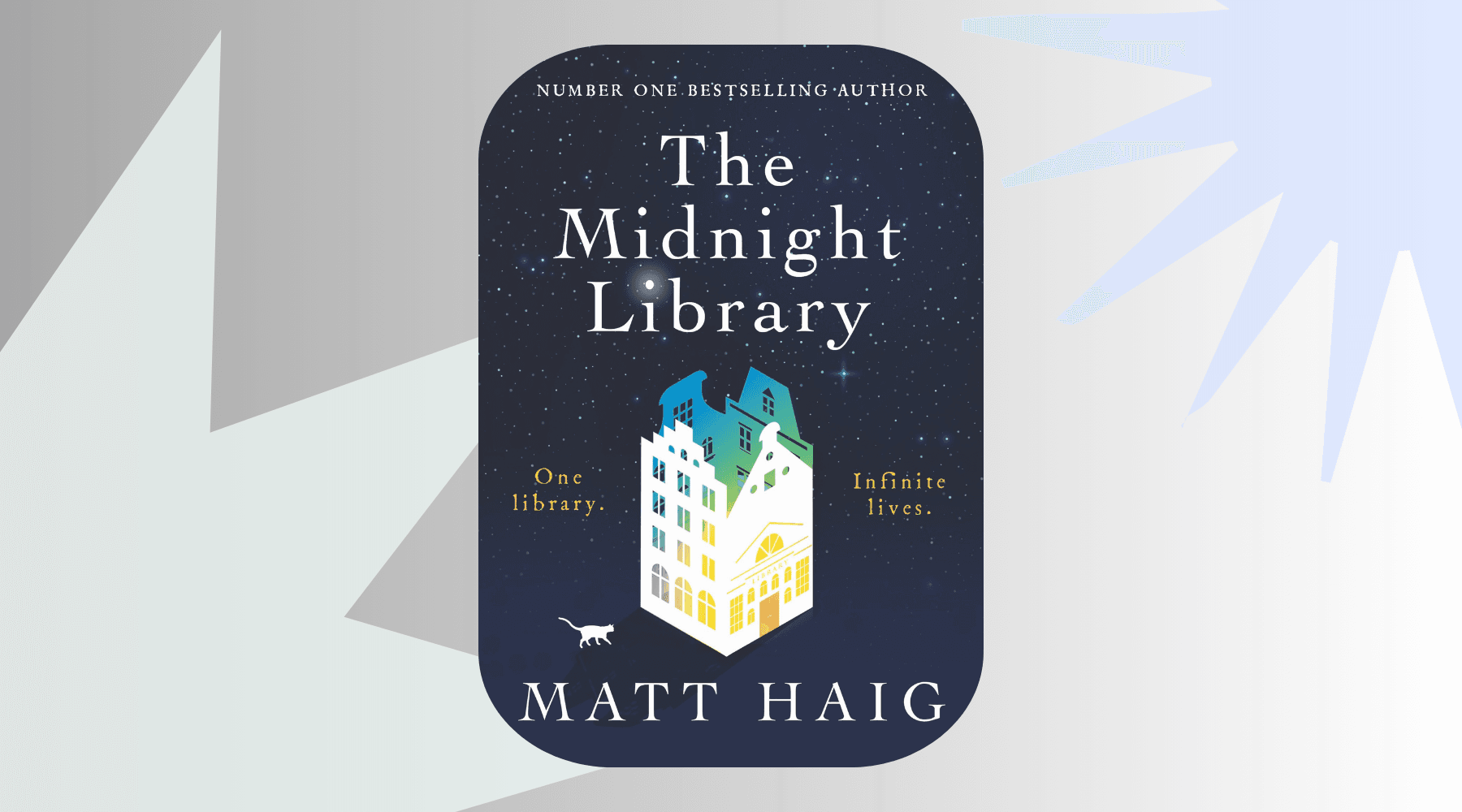
The Midnight Library by Matt Haig is the kind of novel that sounds high-concept on paper and then lands somewhere much more personal. Yes, it has a magical library between life and death. Yes, its shelves contain alternate versions of one woman’s life. But the book’s real subject is regret: how it shrinks a person, how it rewrites memory, and how hard it can be to believe that an imperfect life is still worth living.
If you’re looking for a spoiler-aware The Midnight Library summary, this guide covers the plot, the ending, and the novel’s biggest themes without getting lost in every single alternate timeline.
Quick answer: What is The Midnight Library about?
The Midnight Library follows Nora Seed, a woman overwhelmed by depression, loneliness, and regret. After she reaches a breaking point, she finds herself in a mysterious library between life and death, where each book lets her experience a different life she could have lived if she had made different choices. As Nora moves through these alternate lives, she slowly realizes that no version of life is free from pain, compromise, or uncertainty. The novel’s central idea is that meaning does not come from finding the perfect life. It comes from choosing to live the one you have.
The Midnight Library summary
Nora Seed begins the novel feeling like a failure
At the start of the novel, Nora is deeply unhappy. Her life in Bedford feels painfully small, and nearly every part of it seems marked by disappointment. She is estranged from people she loves, haunted by choices she did not make, and convinced that she has let both herself and others down.
Matt Haig builds this opening section around accumulation. Nora is not crushed by one dramatic event alone; she is worn down by grief, isolation, and the steady pressure of believing that other versions of herself would have turned out better. She thinks she should have stayed with her former fiance9 Dan, pursued music more seriously, followed her talent as a swimmer, or made bolder decisions when she had the chance. In other words, she is trapped by the fantasy of the life she “should” have lived.
When Nora reaches her lowest point, the novel shifts from realism into speculative fiction.
The Midnight Library is a space built from regret and possibility
Instead of dying outright, Nora arrives in the Midnight Library, a strange place suspended between life and death. The library is overseen by Mrs. Elm, Nora’s former school librarian, who appears as a calm, guiding presence. Every book in the library contains one possible version of Nora’s life, shaped by a different choice.
The library’s most important rule is simple: Nora can step into these alternate lives and experience what would have happened if she had chosen differently. One life begins where she never quit swimming. Another starts from the point where she stayed with Dan. Another grows from the decision to keep performing music with her brother. Each possibility answers a regret.
This is where the novel gets clever without becoming cold. The library is not really about wish fulfillment. It is about testing the stories regret tells us. Nora assumes that her pain comes from making the wrong choices. The library lets her examine that assumption one life at a time.
Nora tries life after life, looking for the one that feels right
Much of the novel’s middle section follows Nora as she moves through different versions of herself. These lives vary wildly in tone and scale, but together they teach her the same uncomfortable lesson: changing one decision does not create a flawless existence.
- The life with Dan: Nora sees what might have happened if she had married her former fiance9 and followed the pub-owning future they once imagined. From a distance, this looked like a regretted chance at stability. Up close, it is much messier. Their relationship is strained, and the life she once idealized does not fit her the way she thought it would.
- The swimming life: In another version, Nora becomes an elite athlete and achieves the kind of success that once seemed to promise meaning. But accomplishment alone does not guarantee emotional connection or inner peace. The life is impressive, not necessarily fulfilling.
- The music life: Nora also experiences a version of herself shaped by the path she did not take in music. Here the novel pushes against another common fantasy: that public success would automatically heal private wounds. It would not.
- The Arctic life: One of Nora’s most memorable alternate lives places her in scientific work in a remote icy setting. This life opens the book outward and introduces a sense of wonder, but it also reminds her that even bold, adventurous versions of existence contain danger, loneliness, and unanswered questions.
- The life with Ash and Molly: One of the most emotionally important lives is a quieter one, in which Nora shares ordinary family happiness. This possibility matters because it is not glamorous. It suggests that the life she truly longs for may not be the most extraordinary one, but the one rooted in love, presence, and daily meaning.
These episodes are not random. Each one dismantles a different version of Nora’s self-punishment. She has built her identity around absence: the race not won, the relationship not kept, the city not moved to, the career not pursued. The Midnight Library forces her to see that every life includes trade-offs. To choose one path is always to lose another.
Hugo helps broaden the novel’s idea of possibility
During her travels, Nora meets Hugo, another person moving through alternate lives. His presence matters because it confirms that the Midnight Library is not merely an internal metaphor created for Nora alone. It is a larger liminal system, one in which human consciousness can explore possibility at the edge of death.
More importantly, Hugo acts as a kind of contrast. He understands the system and moves through it with confidence, almost like a seasoned traveler. Nora, by comparison, is still emotionally tied to the question that brought her there: not just “What life could I have had?” but “Why did I believe my own life was beyond repair?”
The key turning point is not finding a perfect life
The novel’s turning point comes when Nora starts to understand that she has been asking the wrong question. She believes she needs to locate the single correct life, the version where everything finally clicks. But the more she explores, the clearer it becomes that such a life does not exist.
Some alternate lives contain love but not freedom. Some contain status but not intimacy. Some contain adventure but not belonging. Even the lives that appear happiest from the outside still involve grief, uncertainty, conflict, or loss. That is not a failure of the system. It is the point.
Nora slowly realizes that regret has been lying to her by offering impossible comparisons. She has been measuring her real life against imaginary perfection. Once she sees that every path is partial and every self is unfinished, the grip of regret begins to weaken.
The ending of The Midnight Library explained
By the final part of the novel, the Midnight Library itself becomes unstable. This reflects Nora’s changing relationship to life and death. She is no longer simply trying on alternate selves for escape. She is beginning to want something more difficult and more hopeful: a future that is actually hers.
The ending matters because Nora does not choose her original life because it suddenly looks easy. She chooses it because she finally understands that possibility still exists within it. The point is not that her old problems were illusions. They were real. Her pain was real too. But her life was not finished, and that changes everything.
Nora returns to her own body and survives. Back in her original life, she begins to see it differently. She reconnects with people she had lost faith in, opens herself to relationships she had closed off, and stops interpreting every disappointment as proof that she is fundamentally broken.
One especially important shift is that she no longer treats regret as evidence. The novel suggests that regret often feels factual when it is really imaginative. It tells us we know what the better life would have been, when in truth we usually know only the fantasy version.
The ending is hopeful, but not neatly tied up with a bow. Nora does not wake into a magically solved existence. She wakes into a life that is still uncertain. The difference is that uncertainty no longer reads as failure. It reads as freedom.
What are the main themes in The Midnight Library?
1. Regret distorts reality
The clearest theme in the novel is that regret is a poor narrator. Nora enters the library convinced that her unhappiness can be traced to a handful of wrong turns. But each alternate life reveals how simplistic that idea is. What she regrets is not always what would have saved her. Sometimes it is simply what she had the most time to romanticize.
This is what gives the novel its emotional sting. Most readers have their own private Midnight Library, even if it exists only in thought. The job not taken. The person not called back. The city not moved to. Haig turns that mental habit into a literal setting and then gently argues against it.
2. There is no perfect version of a life
Another major theme is that every life includes loss. That may sound bleak, but the novel treats it as strangely liberating. If no life can contain everything, then failure to contain everything is not failure at all. It is simply what being human looks like.
This idea is why the book resonates with so many readers. Nora’s problem is not just sadness. It is perfectionism disguised as hindsight. She cannot forgive herself because she assumes the right choice would have eliminated pain. The library teaches her that pain changes shape, but it does not disappear.
3. Small lives are not lesser lives
The Midnight Library pushes back against the belief that a life matters only if it is spectacular. Some of Nora’s alternate selves are admired, accomplished, or glamorous. Yet the lives that move her most are often the quieter ones, shaped by affection, presence, and everyday responsibility.
That is one of the novel’s gentlest arguments: meaning is not always loud. A life does not need to be famous to be full.
4. Identity is more flexible than we think
As Nora inhabits different possibilities, the novel also asks what makes a person who they are. Is identity built from achievement? Relationship? memory? choice? circumstance? The book never turns this into a heavy philosophical lecture, but it keeps the question alive.
Nora learns that she is not one fixed self who failed to become the correct version. She contains many possible selves, and that realization becomes a source of hope rather than paralysis.
5. Hope begins before certainty
Perhaps the book’s most practical theme is that you do not need complete answers before choosing to go on. Nora does not return because she finally knows exactly how her future will unfold. She returns because she becomes willing to meet a future she cannot predict.
That is a very different kind of optimism from the glossy kind. It is not “everything will be perfect.” It is “something meaningful may still happen if I stay.”
Why this summary matters for the book’s bigger message
A plain plot recap of The Midnight Library can make it sound like a novel about parallel universes and second chances. It is that, technically. But the deeper story is about self-forgiveness. Nora does not need to discover a superior life. She needs to stop using imagined lives as weapons against herself.
That is why the ending feels earned. The book does not claim that depression can be solved by one revelation or one inspiring speech. Instead, it dramatizes a shift in perspective: from seeing life as a list of ruined opportunities to seeing it as an unfinished space where choice still matters.
For some readers, the novel will feel comforting. For others, it may feel intentionally obvious in its lessons. Fair enough. Haig is not trying to hide the point under layers of irony. He is writing toward clarity. Whether that works for a reader will depend on taste, but the emotional argument is consistent from beginning to end.
Final thoughts on The Midnight Library
If you came here wanting a straightforward The Midnight Library summary, the simplest version is this: Nora Seed enters a magical library of alternate lives, discovers that every path carries its own burdens, and returns to her original life with a renewed desire to live it.
If you came for the themes, the novel’s real takeaway is just as simple and much harder to practice. Regret is seductive because it offers a cleaner story than reality does. It tells us one better choice would have fixed everything. The Midnight Library argues the opposite. Life is messy in every direction, and that mess is not proof that we chose wrong. Sometimes it is proof that we are still here, still unfinished, and still able to choose what comes next.